
Our Services
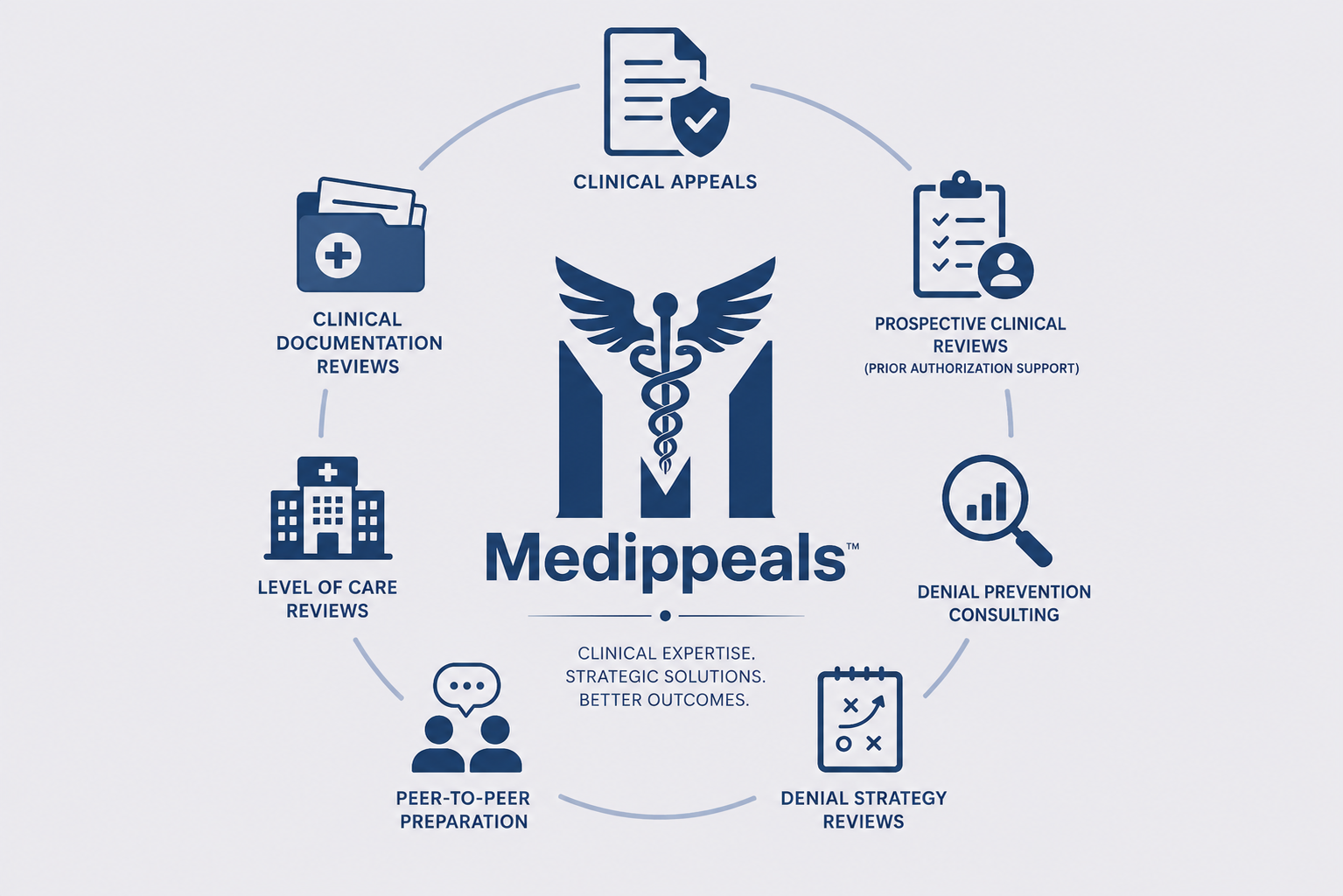
Every organization faces unique denial challenges. Whether you need expert appeal writing, prospective clinical review support, documentation analysis, or strategic consulting, Medippeals delivers evidence-based clinical solutions designed to strengthen reimbursement and improve long-term outcomes.
-
Our experienced appeals nurses prepare evidence-based clinical appeals across the full continuum of care. Every appeal is individually reviewed, supported by nationally recognized clinical criteria, payer policies, and current medical literature—not generated from templates or production quotas.
Services include:
Initial & Second-Level Appeals
Inpatient Medical Necessity
Observation vs Inpatient
Emergency Department
Outpatient Services
DRG Downgrades
Level of Care
Readmission Denials
Clinical Validation
Authorization Denials
Technical and Clinical Reconsiderations
Payer-specific appeals
-
Our prospective clinical review service identifies documentation gaps before services are performed or billed. We evaluate scheduled procedures, admissions, and high-risk encounters using payer requirements and nationally recognized clinical guidelines to identify issues that could result in authorization denials or reimbursement challenges.
Services Include:
Prior Authorization Review
Documentation Gap Analysis
Medical Necessity Validation
Payer Requirement Review
Clinical Recommendation Report
-
We identify why denials occur within your organization and provide practical recommendations to reduce them. Rather than simply correcting individual claims, we analyze recurring denial patterns and help strengthen documentation, workflows, and clinical decision-making to reduce future revenue loss.
Services Include:
Root Cause Analysis
Payer Trend Review
Documentation Improvement Recommendations
Workflow Assessment
Staff Education
-
At Medippeals, we provide expert peer-to-peer support services that equip physicians with the clinical evidence, documentation, and strategy needed to confidently advocate for medically necessary care. Our team reviews the patient's medical record, analyzes payer-specific guidelines, and develops concise, evidence-based talking points that help providers effectively communicate the medical necessity of a treatment, procedure, or admission. By preparing clinicians for these critical conversations, we help improve peer-to-peer outcomes, reduce avoidable denials, protect reimbursement, and minimize administrative burden. With Medippeals as your partner, providers can approach every peer-to-peer review with confidence, knowing they have the clinical expertise and documentation needed to support the best possible outcome for both their patients and their organization.
Services Include:
Clinical Summary
Physician Talking Points
Supporting Literature
Payer Guideline Review
Alternative Clinical Arguments
-
Ensuring patients receive the appropriate level of care is essential for achieving positive clinical outcomes, maintaining regulatory compliance, and securing proper reimbursement. Using nationally recognized clinical guidelines and payer-specific requirements, our experienced clinical reviewers help healthcare providers make informed decisions that support appropriate care leveling and billing practices. By evaluating the appropriate level of care, we help minimize reimbursement risk, improve utilization management, and ensure patients receive the right care at the right time.
-
We perform detailed clinical documentation reviews to identify opportunities for stronger clinical support, improved medical necessity communication, and more complete representation of the patient's condition throughout the medical record. Our recommendations are designed to help organizations strengthen documentation practices and support successful reimbursement.
-
Not every denial should be appealed. Every case submitted to Medippeals undergoes a clinical denial strategy review as part of our standard appeal process. Our experienced appeals nurses evaluate the denial, supporting clinical documentation, and payer rationale to recommend the most appropriate path forward—whether that involves an appeal, rebilling, documentation improvements, or another resolution strategy.